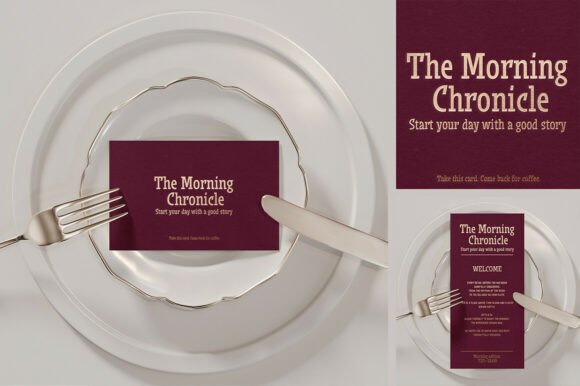
Elevating Hospitality Branding with the Restaurant Foil Stamped Card Mockup
In the competitive landscape of modern hospitality, the difference between a memorable dining experience and a forgettable one often lies in the details. While culinary excellence and service are paramount, the tactile elements of branding play a crucial role in setting the tone before a guest even takes their first bite. This is where the Restaurant Foil Stamped Card Mockup becomes an indispensable tool for designers, restaurateurs, and marketing professionals. It is not merely a digital template; it is a bridge between a flat design concept and the luxurious reality of physical print.
The shift towards premium, experiential dining has driven a demand for branding materials that reflect quality and sophistication. A standard business card or a plain paper menu no longer suffices for fine dining establishments, boutique cafes, or high-end lounges. Clients and stakeholders need to visualize how their logo and typography will interact with light, texture, and material. The Restaurant Foil Stamped Card Mockup addresses this need by providing a realistic preview of gold foil stamping and embossing effects, allowing creators to present their ideas with unparalleled clarity and impact.
The Psychology of Tactile Branding in the Digital Age
It may seem counterintuitive that in an increasingly digital world, the physical质感 (texture) of a brand asset matters more than ever. However, consumer behavior studies suggest that tactile engagement creates a deeper emotional connection. When a guest holds a heavy, textured card with shimmering gold foil, the brain registers value and exclusivity. This psychological cue sets expectations for the meal to follow.
Designers and entrepreneurs are paying attention to tools like the Restaurant Foil Stamped Card Mockup because they understand that selling a vision requires showing, not just telling. In the past, convincing a client to invest in expensive foil stamping required printing physical proofs, which was time-consuming and costly. Today, high-resolution mockups allow for instant visualization. With features like 3500x3500 pixel size and 300dpi resolution, these digital assets provide print-ready clarity, ensuring that the virtual representation matches the final physical product.
This trend aligns with a broader movement in the creative industry towards "hyper-realism" in presentation. Whether for table cards, menus, or welcome cards, the ability to simulate light reflection on gold foil or the shadow depth of embossing helps stakeholders make informed decisions quickly. It reduces the risk of miscommunication and ensures that the final output aligns perfectly with the brand's identity.
Adapting to Changing Workflows and Client Expectations
The workflow of the modern graphic designer has evolved. Speed and efficiency are no longer optional; they are expected. Clients want to see multiple variations of a design in real-time. The traditional method of waiting days for a print proof is obsolete. This is why the Restaurant Foil Stamped Card Mockup is designed with easy and fast editing via smart objects. By simply double-clicking the smart-object layer, pasting the design, and saving, professionals can generate photorealistic previews in seconds.
This efficiency supports a more iterative design process. Designers can experiment with different fonts, colors, and layouts without the fear of wasting resources. The mockup includes organized layers and folders, reflecting a professional standard that respects the user's time and organizational needs. For freelancers and agencies managing multiple projects, this streamlined workflow is a game-changer.
Furthermore, the versatility of the mockup caters to diverse needs within the hospitality sector. It includes two distinct card sizes: 85×55mm for standard business cards or table markers, and 100×210mm for elongated menu inserts or reservation cards. This flexibility ensures that the tool is relevant for various applications, from a small coffee shop's loyalty card to a Michelin-starred restaurant's tasting menu.
Practical Applications Across the Hospitality Spectrum
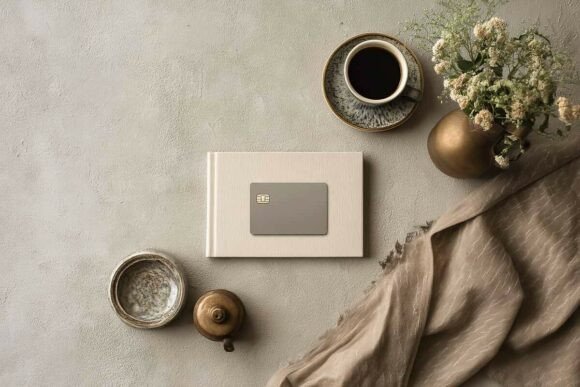
The utility of the Restaurant Foil Stamped Card Mockup extends beyond simple visualization. It serves as a critical component in pitch decks, portfolio presentations, and social media marketing. Consider a scenario where a branding agency is pitching to a new upscale steakhouse. Presenting a flat JPEG of a logo is underwhelming. However, showcasing that same logo on a black card with gleaming gold foil, complete with realistic shadows and highlights, instantly elevates the perceived value of the proposal.
Similarly, for entrepreneurs launching a new venue, these mockups are vital for pre-launch marketing. They can be used to create teaser campaigns on Instagram or LinkedIn, giving potential customers a glimpse of the premium experience awaiting them. The clean, minimal presentation style of these mockups ensures that the focus remains on the design itself, avoiding distracting backgrounds that might dilute the brand message.
From a technical standpoint, the inclusion of 2 PSD files offers variety in perspective and lighting, allowing designers to choose the angle that best suits their specific project. The accompanying Help file.pdf ensures that even those new to Photoshop can navigate the smart object system effortlessly. It is worth noting that while images are used for preview purposes only, the structure is built to accommodate any vector or raster artwork, making it a universal solution for creative projects.
The Intersection of Technology and Craftsmanship
The existence of such high-fidelity mockups represents a fascinating intersection of digital technology and traditional craftsmanship. Foil stamping and embossing are ancient printing techniques that require precision and skill. Digitally replicating these effects requires advanced rendering capabilities and a deep understanding of how light interacts with metallic surfaces. The Restaurant Foil Stamped Card Mockup succeeds because it does not just overlay a texture; it simulates the physics of light and shadow.
This level of detail is essential for maintaining trust between the designer and the printer. When a client approves a design based on a high-quality mockup, they have a clear expectation of the outcome. This reduces the likelihood of disputes over the final print quality. In an industry where margins can be tight and reputations are built on consistency, this clarity is invaluable.
Moreover, as sustainability becomes a larger concern in the printing industry, the ability to finalize designs digitally before committing to physical production helps reduce waste. By perfecting the layout and visual impact in the digital realm using tools like the Restaurant Foil Stamped Card Mockup, businesses can ensure that their first physical print run is flawless, minimizing the need for reprints and discarded materials.
Future-Proofing Your Brand Assets
As the hospitality industry continues to recover and evolve, the emphasis on unique, personalized experiences will only grow. Brands that invest in high-quality visual assets now are positioning themselves for long-term success. The Restaurant Foil Stamped Card Mockup is not just a temporary fix for a current project; it is a long-term asset in a designer's toolkit. Its high resolution and organized structure ensure it remains useful as screen technologies improve and display standards rise.
For marketers, the ability to produce stunning visuals quickly means staying agile in a fast-paced market. Trends in dining change rapidly, and the ability to pivot branding materials without delay is a competitive advantage. Whether updating a seasonal menu or launching a special event, having a reliable mockup system allows for rapid deployment of marketing collateral.
In conclusion, the Restaurant Foil Stamped Card Mockup is much more than a collection of pixels and layers. It is a strategic tool that enhances communication, streamlines workflows, and elevates brand perception. By bridging the gap between digital design and physical reality, it empowers professionals to create compelling narratives for their clients. In a world where first impressions are often made through touch and sight, ensuring that those impressions are nothing short of exceptional is the ultimate goal. Embracing tools that facilitate this level of quality is not just a choice; it is a necessity for anyone serious about excellence in the hospitality and design sectors.
Whether you are a seasoned art director, a freelance graphic designer, or a restaurant owner looking to refine your brand identity, integrating this mockup into your process offers a tangible return on investment. It transforms abstract ideas into concrete visions, fostering confidence and driving results. As we move forward, the fusion of realistic digital presentation and artisanal print techniques will continue to define the standard of luxury in the marketplace.