Embracing Joy: The Rise of Kawaii Japanese Food Bunny Clipart in Modern Design
In the evolving landscape of digital content and creative entrepreneurship, visual storytelling has become more than just an aesthetic choice; it is a strategic necessity. Among the myriad of styles capturing attention today, Kawaii Japanese Food Bunny Clipart stands out as a unique intersection of culinary culture, character design, and emotional connection. This specific niche blends the global fascination with Japanese cuisine—sushi, ramen, onigiri, and tempura—with the universally appealing "kawaii" or cute aesthetic, anchored by charming bunny characters. For creators, small business owners, and hobbyists, understanding the appeal and utility of these illustrations is key to leveraging them effectively in a crowded market.
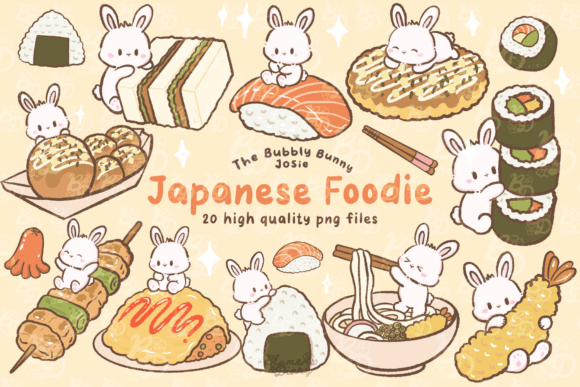
The concept of kawaii, originating in Japan, has transcended its borders to become a global language of kindness and approachability. When combined with food imagery, it taps into two powerful human drivers: the comfort of nourishment and the joy of cuteness. A collection like the Japanese Foodie Bunny Clipart set does not merely offer images; it provides a toolkit for evoking warmth. These hand-drawn elements, featuring bunnies interacting with curry rice, takoyaki, and noodles, resonate because they soften the commercial edge of branding. In an era where consumers are increasingly skeptical of overly polished, corporate messaging, the soft, organic lines of hand-drawn art offer a sense of authenticity and human touch that vector-perfect graphics often lack.
The Shift Toward Emotional Branding and Cozy Aesthetics
The surge in popularity for assets like Kawaii Japanese Food Bunny Clipart reflects a broader shift in consumer preferences toward "cozy" and comforting visuals. Following years of rapid digital acceleration and global uncertainty, there is a palpable desire for content that feels safe, inviting, and gentle. This trend is evident in the rise of "slow living" movements, the popularity of lo-fi study beats, and the aesthetic of digital planners filled with soothing stickers.
For entrepreneurs and marketers, this shift means that the tone of visual assets matters as much as the message. A bakery using a stern, high-contrast logo might convey efficiency, but a café utilizing a clipart set of bunnies enjoying mochi and tea conveys community and relaxation. The psychological impact of these images is subtle yet profound. They lower defenses and invite engagement. When a customer sees a planner sticker sheet featuring a bunny holding a bowl of ramen, they aren't just seeing a decoration; they are experiencing a moment of micro-joy. This emotional resonance is what drives loyalty in small businesses and creates shareable moments on social media platforms.
Furthermore, the specificity of the theme—Japanese food—adds a layer of cultural appreciation and culinary curiosity. Japanese cuisine is renowned globally for its presentation and balance. By pairing these iconic dishes with whimsical characters, designers can create content that feels both sophisticated in its subject matter and accessible in its execution. It allows brands to participate in food trends without needing professional photography for every post, offering a versatile alternative that maintains brand consistency.
Practical Applications for Creators and Small Businesses
The utility of high-resolution, transparent PNG clipart extends far beyond simple decoration. For the modern creator, these assets are building blocks for a diverse range of projects. Consider the workflow of a stationery designer or an Etsy shop owner. The demand for printable sticker sheets and planner accessories remains robust. A set of 20 hand-drawn images, such as those found in a comprehensive Japanese Foodie Bunny collection, provides immediate inventory. These images can be scaled, arranged, and printed onto adhesive paper to create physical products that cater to the organized yet creative individual.
Beyond physical goods, digital integration is equally critical. Bloggers and content creators often struggle to find unique imagery that doesn't look like generic stock photography. Incorporating kawaii bunny illustrations into blog headers, social media stories, or newsletter graphics can define a brand's visual identity. For instance, a food blogger reviewing local sushi spots could use these clips to break up text, add humor to captions, or create custom "verified" badges for their reviews. The transparent background feature, standard in high-quality 300 DPI files, ensures seamless integration across various digital canvases, from Instagram posts to website banners.
Educators and parents also find immense value in these resources. In classroom settings or home-schooling environments, themes of food and culture are common. Using cute, non-threatening characters to illustrate lessons about Japanese geography, nutrition, or cultural traditions can engage younger audiences more effectively than textbook diagrams. The friendly nature of the bunny character acts as a mascot, guiding learners through activities, worksheets, or reward charts. Similarly, for party planners, these clips serve as the foundation for invitations, cupcake toppers, and thank-you cards, turning a standard birthday party into a themed experience that feels curated and special.
Navigating Quality and Usability in Digital Assets
When selecting clipart for professional or semi-professional use, technical specifications are just as important as artistic style. The term "hand-drawn" implies a certain texture and imperfection that adds charm, but it must not compromise clarity. High-resolution files, typically at 300 dots per inch (DPI), are essential for print applications. If a user intends to print sticker sheets or packaging labels, low-resolution images will appear pixelated and unprofessional, undermining the brand's credibility. Therefore, ensuring that a Kawaii Japanese Food Bunny Clipart set offers true high-definition PNGs is a non-negotiable requirement for serious creators.
Transparency is another critical factor. Images with white backgrounds require tedious editing in software like Photoshop or Canva to isolate the subject. A properly prepared clipart set comes with transparent backgrounds, allowing the user to place the bunny and sushi directly onto colored paper, patterned digital backgrounds, or product mockups without unsightly white boxes. This efficiency saves time, which is a valuable currency for freelancers and small business owners who often wear multiple hats.
Versatility within the collection also enhances its value. A set that includes a variety of foods—such as tempura, curry rice, and onigiri—alongside different bunny expressions or poses offers more combinatorial possibilities. It allows the user to tell a story rather than just repeating a single image. For example, a sequence of images showing a bunny preparing, eating, and enjoying a meal can be used to create a comic strip for a children's book or a step-by-step guide for a recipe blog.
The Future of Niche Illustration in a Saturated Market
As the market for digital assets grows, differentiation becomes harder. Generic icons and overused stock photos no longer capture attention. The future belongs to niche, thematic collections that speak to specific communities and interests. The fusion of animal characters with specific culinary traditions represents a smart segmentation strategy. It appeals simultaneously to animal lovers, foodies, and fans of Japanese culture.
Moreover, the trend toward personalization suggests that users want assets they can make their own. Hand-drawn styles inherently feel more personal than rigid geometric designs. They suggest that a human being sat down and created something with care, a sentiment that aligns with the values of the "maker movement." As artificial intelligence begins to generate vast quantities of generic imagery, the distinct style of a curated, human-created clipart set gains premium value. It offers a guarantee of cohesive style and intentional design that AI generators often struggle to maintain consistently across a full set.
For those looking to integrate these elements into their workflow, the recommendation is to view them not just as decorations, but as communication tools. Use them to soften your brand voice, to add a layer of delight to mundane tasks like planning or accounting, and to connect with an audience that values warmth and creativity. Whether you are designing packaging for a small batch cookie business, creating a digital planner for students, or simply scrapbooking family memories, the right illustration can transform the ordinary into the extraordinary.
In conclusion, the relevance of Kawaii Japanese Food Bunny Clipart lies in its ability to bridge the gap between professional utility and emotional satisfaction. It caters to a modern desire for content that is both functional and heartwarming. By choosing high-quality, versatile, and thematically rich illustrations, creators and businesses can enhance their projects with a touch of whimsy that resonates deeply with today's audiences. The combination of delicious food imagery and adorable characters creates a visual language that is universal, timeless, and undeniably effective in fostering connection.