Evaluating Botanical Floral Wreath Silhouettes for Professional and Personal Design Projects
In the realm of graphic design and digital crafting, the choice of visual elements often dictates the tone and success of a project. Among the most enduring and versatile assets available to creators is the Botanical Floral Wreath Silhouette. This specific style of illustration strips away color gradients and intricate shading to focus purely on form, utilizing bold black shapes to depict leaves, branches, blossoms, and berries arranged in circular compositions. For designers, crafters, and business owners aged 20 to 50 who are evaluating resources for branding, invitations, or home décor, understanding the distinct advantages and limitations of this format is essential for making an informed decision.
Defining the Aesthetic and Technical Distinction
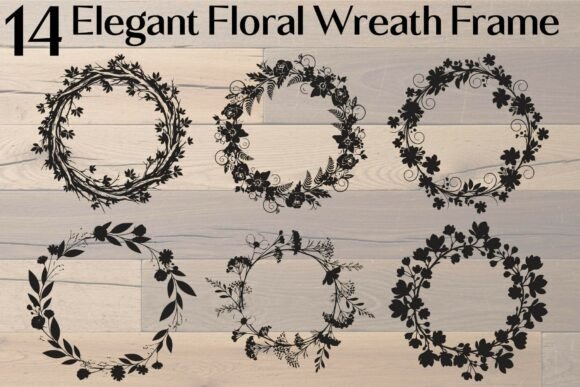
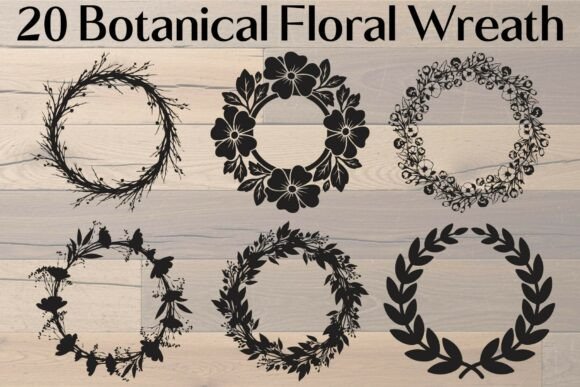
A botanical floral wreath silhouette is defined by its high-contrast, monochromatic presentation. Unlike watercolor illustrations that rely on soft blends or realistic photography that captures texture and depth, silhouettes reduce natural elements to their essential outlines. This reductionist approach creates a clean, sophisticated appearance that is inherently timeless. The "botanical" aspect ensures that the subjects remain recognizable as nature-inspired forms—such as eucalyptus, wildflowers, or berry clusters—while the "silhouette" treatment provides a uniform weight and density to the image.
Technically, these designs are most valuable when provided as vector files (such as EPS or SVG formats). Vector graphics use mathematical paths rather than pixels, allowing the image to be resized infinitely without any loss of sharpness. This is a critical differentiator when comparing silhouettes to raster-based images (like standard JPEGs or PNGs), which can become pixelated when enlarged. A high-quality bundle typically includes multiple file types to ensure compatibility across various workflows, from professional printing presses to consumer-grade cutting machines.
Comparative Analysis: Silhouettes vs. Other Illustration Styles
When selecting assets for a project, designers often weigh silhouettes against other popular styles such as hand-painted watercolors, line art, or full-color digital paintings. Each style serves a different purpose, and the choice depends heavily on the intended application.
- vs. Watercolor and Painted Styles: Watercolor wreaths offer a soft, romantic, and organic feel, making them ideal for baby showers or spring-themed events. However, they can sometimes clash with busy backgrounds or fail to provide enough contrast for legible text overlays. In contrast, a Botanical Floral Wreath Silhouette offers maximum contrast. The solid black shape acts as a strong frame, ensuring that white or light-colored monograms and typography pop clearly against the design. Silhouettes are generally more versatile for dark-mode designs or applications requiring high visibility.
- vs. Line Art and Sketches: Line art provides a delicate, airy aesthetic but can get lost when scaled down for small applications like stickers or social media icons. Silhouettes maintain their structural integrity even at smaller sizes because the filled shapes occupy more visual space than thin lines. This makes them superior for logo design where scalability is paramount.
- vs. Photographic Elements: While photos offer realism, they are often difficult to integrate seamlessly into flat design layouts without complex masking or background removal. Silhouettes are inherently transparent (in vector and PNG formats), allowing for immediate integration into any colored background without additional editing.
Practical Applications and Best-Fit Scenarios
The versatility of the botanical wreath silhouette makes it a staple in several industries. Its neutral yet elegant nature allows it to adapt to trends ranging from rustic farmhouse to modern minimalist.
Branding and Logo Design
For entrepreneurs establishing a brand identity, particularly in the wedding, wellness, or boutique sectors, these silhouettes serve as excellent foundational elements. A round wreath composition naturally draws the eye inward, creating a perfect container for initials or brand names. Because the style is devoid of fleeting color trends, a logo built on a silhouette base tends to have a longer shelf life, avoiding the need for frequent rebranding.
Digital Crafting and Sublimation
The rise of DIY crafting machines, such as Cricut and Silhouette, has increased the demand for SVG files. A collection of 20 varied wreath designs provides crafters with the flexibility to create vinyl decals, heat transfers for apparel, and sublimation prints. The bold nature of the silhouette ensures that when cut from vinyl, the delicate twigs and leaves do not tear or weed poorly, a common issue with overly intricate line art.
Stationery and Invitations
In the context of wedding invitations and greeting cards, the silhouette style offers a classic look that pairs well with foil stamping, embossing, or letterpress printing. Since these printing methods often rely on a single ink color or metallic finish, the solid shape of a silhouette translates perfectly to the physical medium, whereas gradient-heavy images may lose detail.
Limitations and Decision Factors
While the Botanical Floral Wreath Silhouette is a powerful tool, it is not the solution for every design challenge. Understanding its limitations is just as important as recognizing its strengths.
The primary limitation is the lack of internal detail. Because the image is a solid block of color, it cannot convey the texture of a leaf vein or the gradient of a flower petal. If a project requires a hyper-realistic or highly textured botanical representation, a silhouette will appear too abstract. Additionally, because the style is so popular, there is a risk of overuse. Designers must carefully select unique arrangements within a bundle to ensure their final product does not look generic.
Another consideration is color flexibility. While vectors can be recolored easily in software like Adobe Illustrator, users working strictly with pre-rendered PNG or JPG files are limited to the provided colors (usually black). Therefore, when evaluating a product bundle, it is crucial to verify that editable vector formats (EPS/SVG) are included if color customization is a requirement.
Evaluating File Formats and Bundle Value
When sourcing these resources, the value of a collection is often determined by the comprehensiveness of its file formats. A robust bundle should ideally include:
- EPS Files: Essential for professional designers using desktop publishing software. These allow for full editability of anchor points and paths.
- SVG Files: The standard for web design and cutting machines. They ensure crisp rendering on screens and precise cuts for vinyl plotters.
- PNG Files: High-resolution files with transparent backgrounds are necessary for users who do not have vector editing software but need to drag and drop elements into programs like Canva or PowerPoint.
- JPG and PDF Files: Useful for quick previews and print-ready documents where vector editing is not required.
A collection offering 20 distinct designs across these five formats provides a significant advantage, covering nearly every potential workflow from digital marketing to physical manufacturing.
Making the Right Choice for Your Project
Ultimately, deciding whether to utilize a Botanical Floral Wreath Silhouette comes down to the specific goals of your project. If you require a design element that offers high contrast, scalability, and a timeless aesthetic that bridges the gap between rustic and modern, this style is an exceptional choice. It excels in situations where clarity and legibility are prioritized over textural realism.
However, if your project demands a soft, painterly feel or intricate internal details that mimic nature exactly, you may need to explore watercolor or photographic alternatives. For those balancing budget, versatility, and professional quality, investing in a diverse bundle of vector silhouettes remains one of the most practical decisions a designer or crafter can make. By providing a ready-to-use framework that elevates compositions instantly, these botanical frames continue to be a cornerstone resource for creative professionals navigating the demands of modern visual communication.